Raptor Innovation Summit 2026 Content Is Now Available
Explore presentations and insights from this year’s Summit.
Explore presentations and insights from this year’s Summit.

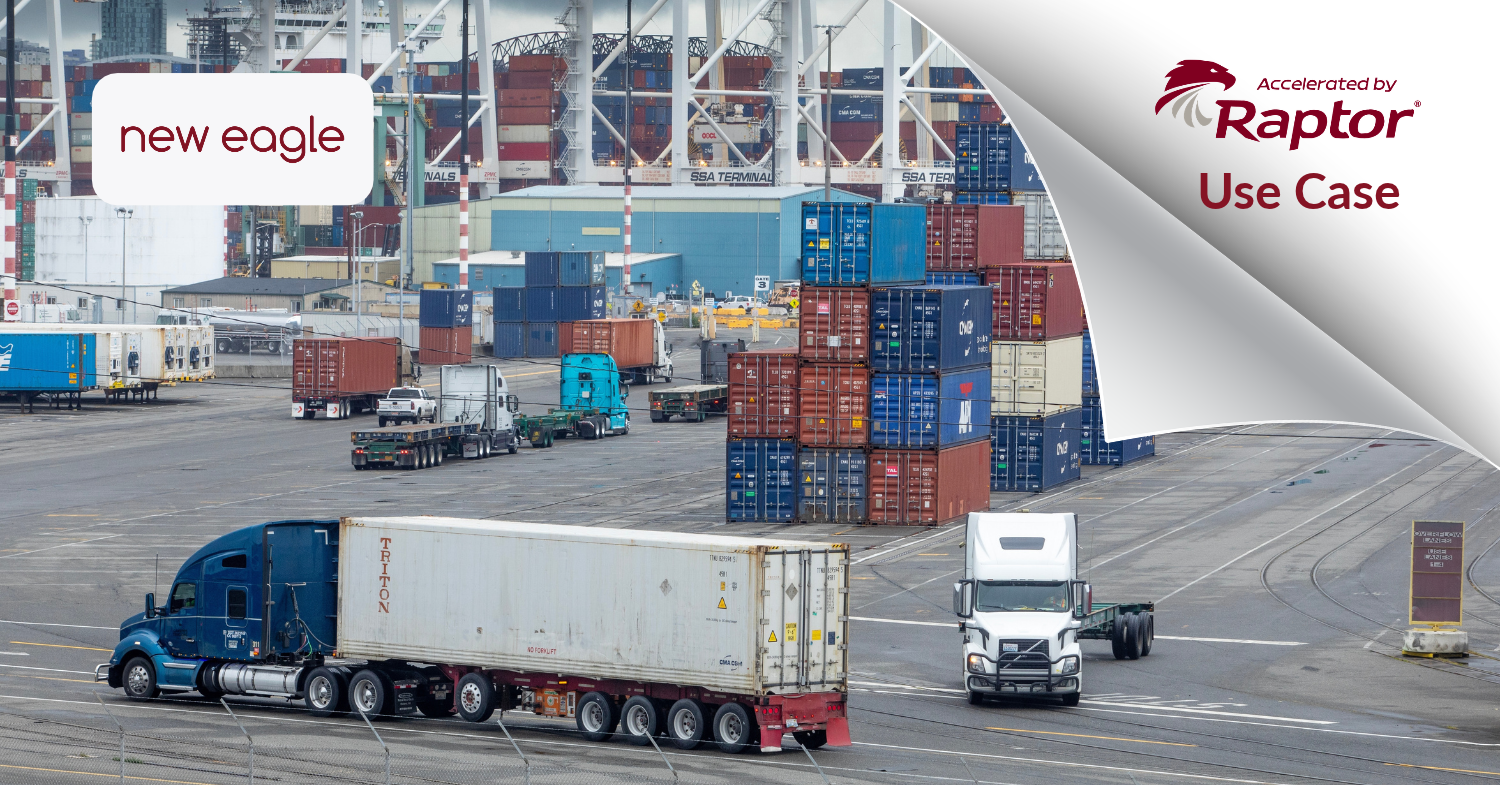
Commercial vehicle manufacturers are navigating a significant shift in how vehicles are designed, developed, and supported. Electrification, automation, and increasing software complexity are changing the role of vehicle controls from a collection of embedded functions into a strategic engineering capability.
For a manufacturer of terminal tractors, this shift created an opportunity to modernize its vehicle controls platform and at the same time to build greater internal ownership of its software development process. The goal went far beyond a simple update to an existing vehicle platform. The manufacturer needed a scalable controls foundation that was both capable of supporting multiple vehicle architectures (including diesel, electric, and future autonomous applications) and enabling its engineering teams to continue developing and evolving the software internally.
Through a growing engineering partnership with New Eagle, the manufacturer established a model-based development workflow, integrated production-ready control hardware, and expanded its controls capabilities across multiple vehicle systems. The strength of this collaboration was recognized when the manufacturer presented New Eagle with an Innovation Award for the project, highlighting the combination of available technology, software expertise, and engineering experience that helped accelerate the program.
The result is an ongoing development effort focused on creating a flexible platform that can support future vehicle programs and give the manufacturer greater control over its software strategy.
Terminal tractors operate in demanding commercial vehicle environments and require reliable performance, precise control, and operational durability. As vehicle technology continues to evolve, manufacturers must also adapt their control systems to support new requirements, architectures, and applications.
In looking toward future vehicle programs, the manufacturer’s engineering team recognized that traditional approaches to vehicle software development would not provide the flexibility needed for the next generation of platforms. The company therefore needed to address several priorities simultaneously:
Rather than solving each challenge independently, the manufacturer decided on a unified controls strategy that could support multiple applications and allow its engineers to own and scale future software development. This approach required more than new hardware or individual software functions. It required an engineering framework that could help the manufacturer develop, manage, and evolve its vehicle controls platform over time.
The relationship between the manufacturer and New Eagle began through an existing EV supervisory control program. The manufacturer’s EV supervisory software was originally developed by an engineering consultant. However, by transitioning ownership of that software internally, the manufacturer needed the right development environment and engineering partner to continue advancing the platform.
This transition represented a great deal more than a software handoff. The manufacturer’s objective was to build long-term internal capability and ensure its engineering teams could continue advancing the platform themselves. New Eagle supported this effort by providing the tools, hardware, and engineering expertise required for the manufacturer’s engineers to take ownership of future software development. Instead of becoming dependent on an external development team, the manufacturer could now continue building its own software capabilities with the support of a proven controls partner.
By using New Eagle’s Raptor® model-based development platform, the manufacturer gained a workflow designed to support application development, testing, and future expansion of vehicle control functionality. The Raptor platform provided the foundation for its engineers to continue developing and evolving the software architecture as vehicle requirements changed.
As the manufacturer’s collaboration with New Eagle continued, the scope of the partnership expanded beyond EV supervisory controls. What began as support during a software ownership transition developed into a broader engineering relationship spanning multiple areas of vehicle controls development. New Eagle began supporting additional aspects of the manufacturer’s controls architecture, including:
This expanded engagement allowed the manufacturer to approach vehicle modernization through a more integrated controls strategy. By combining hardware, software, and engineering support, New Eagle helped provide a development path that could evolve alongside the manufacturer’s future vehicle programs.
The partnership also meant the manufacturer could address multiple engineering challenges through a consistent controls approach rather than creating separate solutions for each vehicle application.
A major component of the collaboration between the manufacturer and New Eagle was establishing a model-based development workflow. Software complexity in modern vehicle programs continues to increase. Engineers, therefore, require development environments that not only allow them to iterate quickly and validate functionality but also to maintain ownership of their application software.
The Raptor platform provided the manufacturer with just such a flexible environment for its engineers to develop and deploy vehicle control software while preserving internal software ownership. Through this approach, the manufacturer’s engineers could continue advancing the software platform with a workflow designed for scalability and future development. In practice, that meant the engineering team could:
Rather than creating isolated solutions for individual vehicles, the manufacturer is able to build toward a more adaptable controls platform that is capable of supporting multiple vehicle variants.
Autonomous vehicle development depends on more than perception and decision-making systems. Before autonomous applications can be developed and validated, the underlying vehicle controls must provide predictable, reliable, and controllable behavior. Drive-by-wire technology provides an important foundation because it enables electronic control of critical vehicle functions, such as steering, braking, and propulsion.
New Eagle’s previous drive-by-wire work with an autonomy partner on the same vehicle platform provided a technical foundation for the manufacturer’s autonomous development efforts. This existing software foundation helped accelerate the manufacturer’s internal drive-by-wire development by providing a proven starting point, rather than requiring the team to build foundational controls technology from the outset.
This combination of proven technology and engineering experience was central to the value New Eagle brought to the collaboration. Production-ready hardware, established drive-by-wire software, and prior validation on the same vehicle platform gave the manufacturer a stronger technical starting point as it advanced its own safety and autonomy development efforts.
For the manufacturer, drive-by-wire development represents an important step toward future autonomous vehicle applications. The focus remains on creating a safe, reliable, and scalable controls architecture that can support continued vehicle development.
As vehicle systems become increasingly automated and software-defined, functional safety grows ever more important. The manufacturer and New Eagle continue to work together on functional safety activities that prepare the platform for future production applications. This includes safety architecture development, engineering support, and hardware evolution.
As part of this effort, the platform is transitioning from RCM112 hardware toward CCM112 hardware to strengthen the overall safety approach. Functional safety development remains a significant and ongoing part of the program as the manufacturer continues to prepare its vehicle controls platform for future production needs. This work represents another key step toward building a controls architecture designed to accommodate evolving vehicle requirements.
The manufacturer’s work with New Eagle demonstrates how commercial vehicle manufacturers can approach software-defined vehicle development through a focus on internal capability and scalable engineering processes. The objective was not simply to adopt a new controller or software tool. It was to create a development approach that will continue allowing the manufacturer’s engineers to own and evolve its vehicle software platform.
Through model-based development, production-ready hardware, and collaborative engineering support, the manufacturer is building a controls platform designed to support future diesel, electric, and autonomous vehicle programs. The Innovation Award recognition reflects the broader value of the partnership: combining proven technology and engineering expertise to help the manufacturer build and own the next generation of its vehicle software platform.
The partnership with New Eagle continues to evolve as the manufacturer advances toward future production vehicles. By combining the manufacturer’s vehicle expertise with New Eagle’s controls technology and engineering experience, these two teams are creating the foundation needed for the next generation of commercial vehicle development.