Raptor Innovation Summit 2026 Content Is Now Available
Explore presentations and insights from this year’s Summit.
Explore presentations and insights from this year’s Summit.

Bringing a new medium-duty electric vehicle platform toward production puts new demands on the controls architecture. Hardware and software developed for early vehicle programs have to support production requirements, functional safety, serviceability, and an expanding set of vehicle applications.
For one medium-duty commercial vehicle manufacturer, those requirements came with an additional constraint: the company develops its core vehicle technology in-house and wanted to retain ownership of the software and IP behind it. As the manufacturer advanced its purpose-built medium-duty EV platform, it needed a production-ready controls foundation that its own engineers could continue developing.
New Eagle provided production controller hardware, the Raptor® model-based development environment, and functional safety engineering to support that transition while keeping application software development with the manufacturer.
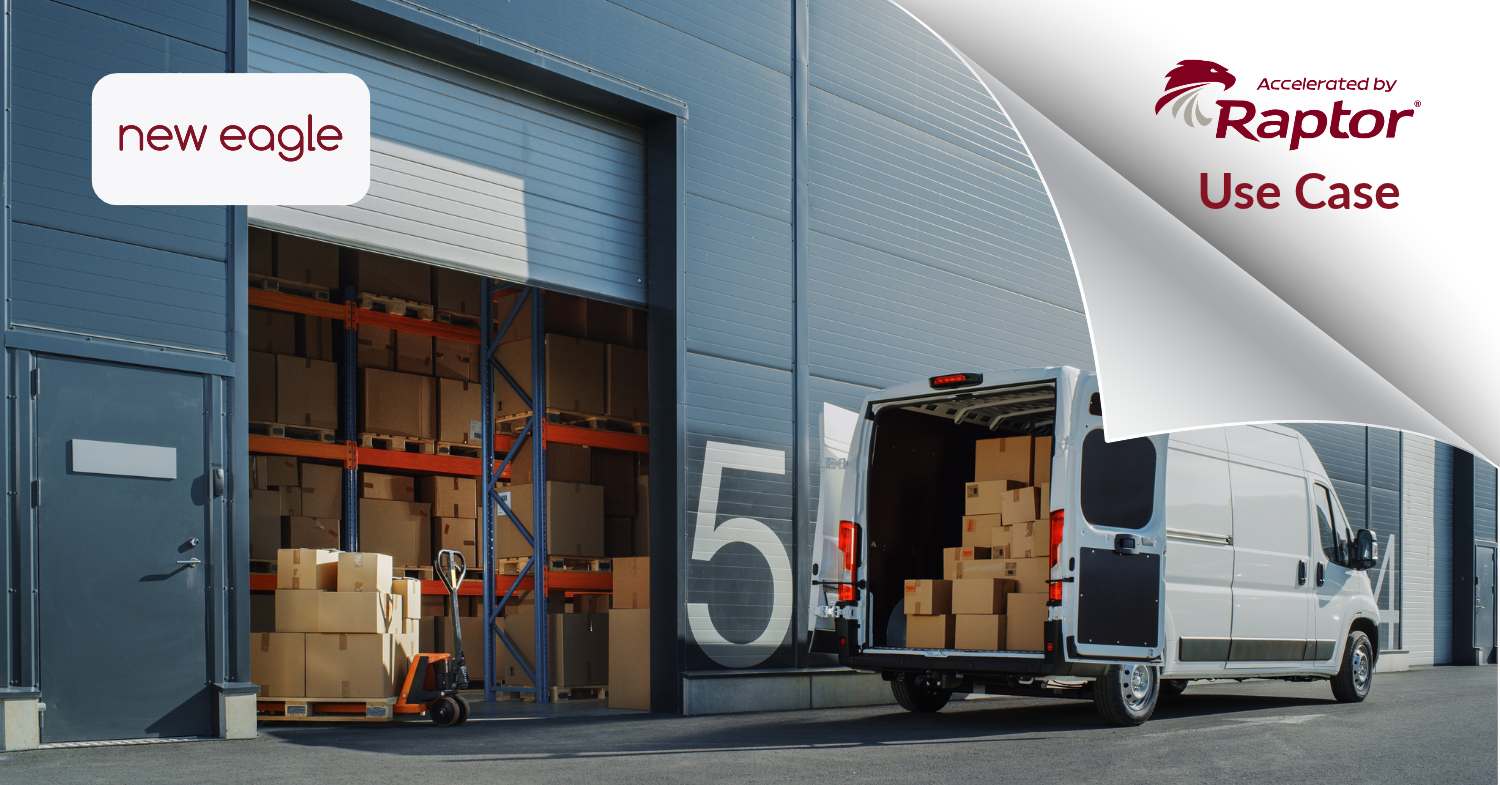
Today, the manufacturer’s vehicles are operating in commercial fleets, supporting applications such as last-mile delivery. This growing commercial deployment underscores the importance of a scalable controls architecture.
The manufacturer develops purpose-built electric and hybrid platforms for medium-duty commercial vehicles. Its offerings include stripped chassis and complete commercial vehicles designed for a range of applications, including last-mile delivery. The company also develops technologies that extend vehicle functionality beyond transportation.
The manufacturer develops its core vehicle technology in-house, giving its engineering team direct control over how the platform operates and evolves. That becomes especially important as a vehicle moves into production and hardware, software, safety processes, security, and serviceability all have to support a longer lifecycle.
The company needed a controls foundation that could mature with the vehicle while allowing its engineering team to develop, own, and evolve its application software rather than relying on a supplier-controlled solution.
Moving a new EV platform toward production creates several engineering challenges at once. Vehicle and body controls have to move beyond prototype functionality. Functional safety enters the development process. Software needs a secure, serviceable path for updates. At the same time, the controls architecture has to remain flexible enough to support different applications.
One requirement cut across all of them: the manufacturer’s engineers needed to remain the owners and developers of the application software. Outsourcing an entire controls stack could address an immediate technology need but create dependence on a supplier for future changes. That did not align with the company’s strategy of developing proprietary vehicle technology internally.
The manufacturer needed production-ready technology that would allow its engineers to own their controls IP and take control of their application software and control strategies. That made the development environment as important as the controller hardware.
New Eagle’s Raptor model-based development platform provides an environment for the manufacturer to develop and maintain its control software internally while deploying it on production-oriented controller hardware. Using a model-based workflow, its engineers can develop, deploy, calibrate, and evolve application software themselves.
Rather than receiving a fixed software package that requires supplier intervention when functionality changes, the manufacturer retains ownership of the application IP and the ability to continue developing it as the platform matures. The same approach extends across multiple control applications. Vehicle, body, and power-control requirements differ, but they do not have to require separate development methods.
A common workflow gives the manufacturer a path to both own its software and scale its development approach across the platform. New Eagle supports that work with production controller hardware and specialized engineering services, including functional safety engineering and secure, over-the-air (OTA) software update capabilities. That development model extends beyond a single controller so the manufacturer can apply it across vehicle, body, and power-control functions.
The engagement spans multiple control domains, sharing a common approach built around production-oriented hardware, model-based development, and manufacturer ownership of the application software.
Across these domains, the manufacturer uses Raptor and Raptor-Safe tooling alongside New Eagle production ECU hardware and engineering support. Its engineers have a consistent workflow for evolving software across multiple control applications while retaining ownership of their IP. The work also includes secure, field-updatable bootloader development to support over-the-air (OTA) software updates and long-term serviceability.
The control functions are different, but the underlying strategy is consistent: to establish a production-directed foundation that can evolve with the vehicle and scale with the manufacturer’s software requirements. Moving that foundation toward production also places requirements on how the controls are designed and developed.
For a production vehicle program, functional safety cannot be treated solely as a final compliance step. Safety requirements can influence architecture, hardware, software, development processes, and validation decisions throughout a program. The manufacturer and New Eagle are developing the controls platform with ISO 26262 functional safety requirements in view, including ASIL D requirements for vehicle control and ASIL B requirements for body control.
New Eagle’s role includes functional safety engineering support and safety-mechanism development, along with evolution of the controls hardware and software as the program matures. Addressing those considerations during development allows the architecture to evolve with functional safety requirements rather than accommodating them only after core functionality has been established.
For the manufacturer, the two priorities can move forward together: preparing the controls environment for production safety expectations while continuing to develop and own the application software within it. At the same time, the controls foundation has to accommodate new vehicle capabilities as the platform evolves.
The controls architecture also has to support applications beyond the vehicle’s core propulsion and body functions. One example is the manufacturer’s exportable-power capability, sometimes referred to as “hotel power.” An electric commercial vehicle carries a significant source of stored electrical energy onboard. The battery and power control application allows that energy to support external electrical loads, extending the utility of the platform beyond transportation alone. The manufacturer is also exploring applications beyond the vehicle itself, including stationary energy storage and off-grid power solutions. The integration of inputs for solar panel arrays further expands the potential for the technology to serve applications in these markets.
For the controls architecture, “hotel power” represents another application with its own power-management requirements built on the broader vehicle platform. Supporting it alongside vehicle and body control demonstrates how a common development approach can extend to new functions as the manufacturer’s application requirements evolve.
The manufacturer has progressed beyond initial pilots, with vehicles already deployed in commercial operations, including delivery applications.
As the company expands its commercial presence, its controls architecture must support evolving vehicle requirements, new applications, and long-term serviceability. New Eagle’s work across vehicle control, body control, functional safety, and exportable power supports that growth through a common, production-directed controls foundation.
The manufacturer’s engineering team remains responsible for its application software. As requirements change or new functions are introduced, its engineers can continue developing and calibrating that software using the same model-based workflow. The objective is to establish an architecture and development process the company can continue using as the platform evolves. Production controller hardware, functional safety engineering, and software serviceability support that progression, while the manufacturer retains control of the application software that differentiates its vehicle.
For the manufacturer, the value of this approach extends beyond production readiness. New Eagle provides the controls platform and engineering support, while the manufacturer retains the flexibility to develop, own, and scale its application software as its business grows.